Tuesday, March 29, 2022

Was the war on drugs good social policy?


 Was the war on drugs good social policy?

No, it had tragic consequences in the U.S. which created even worse problems and worse consequences that the original impact of drug abuse it was designed to curtail and mitigate. It is another example of how the solution became a problem worse than the original problem 

Substance misuse can be focused on as a supply problem or a demand problem. Unfortunately, conservative thinking dealt with it as a supply problem even though it was well known that prohibition didn't work to control the negative consequences of alcohol misuse.

Liberal thinking dealt with substance misuse as a demand problem. Prevention and treatment programs were proposed and implemented in a limited manner due to a lack of resources.

Public thinking is slowly shifting over 60 years and substance misuse is increasingly seen as a public health problem. Advocacy for funding of public health, treatment, and community prevention programs is necessary if we are to improve the overall health of our society.

For more see "How The Drug War Died" by Maia Szalavitz, The Nation, 04/04/11/2022.
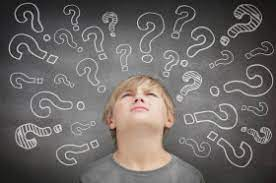


Indicators of systemic racism - Arrest rates for possession of marijuana in U.S. for blacks and whites


From Blunt Equity by Tavian Crosland, The Nation, 04/4/11/22

Sunday, March 27, 2022

It's not what your think but how you think that makes a difference.


There are various polls which attempt to elicit the public's opinions about executive performance of the Federal government and the popularity of the President..

There are meta questions that might be asked such as what is the purpose of these polls, what are they attempting to measure, and what do the measures indicate?

Charles M. Johnston, the cultural psychiatrist who heads up the Institute For Creative Development, and who wrote a wonderful book, Perspective and Guidance For A Time Of Deep Discord, teaches that it is not what people think but how people think that is the basis of the problems we are seeing in our increasingly polarized country and world.

While polling may give us some indication of what people think, although this claim is debatable, they do not inform us about how they think. Cognitive science studies have found that people who are called "conservative" and "liberal" think differently and even may have different brain structures that can be identified on brain scans.

Along this line of thought one might want to know why people think the way they do - is it nature or nurture or a combination or something else?

The human brain is hard wired for dichotomous thinking with the amygdala, fight/flight/fright adrenaline activating region of the brain, being most basic in our emotional and behavioral response until the prefrontal cortex can take over the emotional arousal and provide a cognitive analysis and assessment.

If polls are used to predict how people will vote by triggering them with "hot button" issues the responses will vary based on the activation of the amygdala and the individual's ability to self regulate their emotional arousal until the prefrontal cortex can provide the ability to analyze and choose a deliberate and purposeful way of proceeding.

If the goal is to help people better vet political candidates for their vote, it seems that polling is not only not helpful but is actually harmful as is negative campaigning. What is a better way to assess a person's deeper feelings, beliefs, and thoughts about a political topic? There are some methods that have been developed and utilized. Two might be focus groups and caucusing as they do in Iowa and ranked choice voting that is being experimented with in some states.

The idea of encouraging dichotomous thinking for a democracy is dysfunctional and leads to authoritarianism as we have seen in recent years and social media has made it worse because social media often is more amygdala activating which Donald Trump and others have mastered. Social media does not lend itself by virtue of its format to thoughtful thinking. If we are to move our democracy forward we can find better ways to interact and communicate with each other, and educating people about the limits and pernicious effects of polling would be a step forward.


Friday, March 25, 2022

Representational incompetence - Claudia Tenney, congresswoman from Central New York.

From America Magazine, March, 2022, Political Leaders: Heed Ignatius by Linda LeMura 
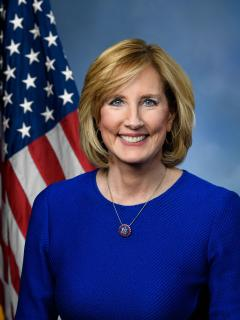

One example was an attack on the faith and character of Pope Francis, the spiritual leader of the Catholic Church, last October. It was particularly troubling for two reasons: it originated close to Le Moyne’s Central New York home, and it came from an elected official, U.S. Representative Claudia Tenney. On Twitter, a platform devoted to small ideas and grand postures, Ms. Tenney responded to a photo of Pope Francis shaking hands with House Speaker Nancy Pelosi by referring to them as “just two communists.”

Editor's Note: Claudia Tenney is a Republican member of the U. S, House of Representatives elected by voters to represent them in Central New York State just east of Syracuse from Oswego to the north to Binghamton on the south.

Representative Tenney's tweet is an argumentum ad hominem and a symptom of representational incompetence.

The good people of central New York deserve better representation and should reconsider their electoral options for representatives who have more constructive values and ways of thinking and communicating.


Saturday, February 26, 2022

Remember when human beings answered the phone?

 Posted on a list serv  on 02/24/22

There were once also things called human beings who answered devices called telephones. Human beings could be given all kinds of information and asked all kinds of questions, and generally understood what was said to them. If not, there were generally other human beings available who could be accessed to assist in the process of accepting information and/or answering questions.

The system worked with amazing accuracy, and problems could be resolved with a single telephone call.

My post in response

Your point is well taken. Your post is a keeper. I have increasingly been thinking the same thing over the last year or so. It seems surprising now when you get an actual human on the phone. The robot voices sound so real that I ask, "Is this a real person?" Sometimes the answer is "yes" and sometimes I get a replay of the instruction.

The other thing I have noticed in my own behavior is a powerful preference for avoidance. I really hate getting caught up in these systems and avoid them if at all possible. I have a handful of clients I just see pro bono because I can't figure out how to bill their insurance carrier and have already wasted more time on their billing than I could earn just using the same time to see another client. Back in the old days working in an agency we called it "bad debt" and it just got written off.

Some might say, "It's just the cost of doing business."

Indeed.

My new meme is "I don't do autorenew. Can I send you a check?"

Friday, February 18, 2022

12% of Americans believe in the overthrow of the American government to restore Donald Trump to the presidency.


In June, the researchers sharpened the questions. This brought another surprise. In the new

poll, they looked for people who not only distrusted the election results but agreed with the

stark assertion that “the 2020 election was stolen from Donald Trump and Joe Biden is an

illegitimate president.” And instead of asking whether survey subjects would join a protest

that “might” turn violent, they looked for people who affirmed that “the use of force is

justified to restore Donald Trump to the presidency.”


Pollsters ordinarily expect survey respondents to give less support to more transgressive

language. “The more you asked pointed questions about violence, the more you should be

getting ‘social-desirability bias,’ where people are just more reluctant,” Pape told me.


Here, the opposite happened: the more extreme the sentiments, the greater the number of

respondents who endorsed them. In the June results, just over 8 percent agreed that Biden

was illegitimate and that violence was justified to restore Trump to the White House. That

corresponds to 21 million American adults. Pape called them “committed insurrectionists.”

(An unrelated Public Religion Research Institute survey on November 1 found that an even

larger proportion of Americans, 12 percent, believed both that the election had been stolen

from Trump and that “true American patriots may have to resort to violence in order to save

our country.”

Gellman, Barton, January 6 Was Practice, The Atlantic, Jan/Feb 2022, p. 31


Is this finding that 12% of Americans want to overthrow the U.S. government to restore Donald Trump to the presidency a concern to the other 88%? If it is what can, should, be done about it? Is the cult of Trump and the GOP going to bring down our democracy? It already is if you look at the states that have enacted voting suppression laws and campaigned for insurrectionists to occupy state wide offices that over see elections.


As Tip O'Neil said when he was speaker of the house in the late 70s and most of the 80s, "All politics are local." Pay attention to who is running for your local offices from school board on up.


Thursday, February 17, 2022

People support Trump because they are afraid of being replaced.


Barton Gellman's article, "January Was Just Practice" in the Fan/Feb 2022 of The Atlantic should be required reading. Gellman describes many important ideas for America's future as a democracy.

The first question addressed is what lead to so many people voting for Donald Trump and his supporters in the Republican party. Many demographic characteristics have been proposed as predictive. Robert A. Pape, a political scientitist, has found based on his research, that one of the most predictive factors of voting for Trump was the fear of losing white privilege. In communities that experienced the greatest loss in white residents to people of color, the whites were more likely to vote for Trump and favor his policies. Pape refers to the theory called the Great Replacement.

MiloÅ¡ević, Pape said, inspired bloodshed by appealing to fears that Serbs were losing their dominant place to upstart minorities. “What he is arguing” in the 1989 speech “is that Muslims in Kosovo and generally throughout the former Yugoslavia are essentially waging genocide on the Serbs,” Pape said. “And really, he doesn’t use the word replaced. But this is what the modern term would be.”

Pape was alluding to a theory called the “Great Replacement.” The term itself has its origins in Europe. But the theory is the latest incarnation of a racist trope that dates back to Reconstruction in the United States. Replacement ideology holds that a hidden hand (often imagined as Jewish) is encouraging the invasion of nonwhite immigrants, and the rise of nonwhite citizens, to take power from white Christian people of European stock. When white supremacists marched with torches in Charlottesville, Virginia, in 2017, they chanted, “Jews will not replace us!”p.30

Gellman writes a little further on in the article: 

Only one meaningful correlation emerged. Other things being equal, insurgents were much more likely to come from a county where the white share of the population was in decline. For every one-point drop in a county’s percentage of non-Hispanic whites from 2015 to 2019, the likelihood of an insurgent hailing from that county increased by 25 percent. This was a strong link, and it held up in every state.

Trump and some of his most vocal allies, Tucker Carlson of Fox News notably among them, had taught supporters to fear that Black and brown people were coming to replace them. According to the latest census projections, white Americans will become a minority, nationally, in 2045. The insurgents could see their majority status slipping before their eyes.

Wednesday, February 16, 2022

The “Big Lie” and the end of democracy


George Packer writes in his article, Imagine The Worse, in the Jan/Feb. 2022 issue of The Atlantic, “If the end comes it will come through democracy itself.” p.18


Packer writes further, “We know what’s driving us toward this cataclysm: not simply Trump, but the Republican party.” p.18


Packer writes, “Meanwhile, Republican lawmakers around the country have spent the year stacking state election offices with partisans who can be counted on to do Trump’s bidding next time. State legislatures have tried, in many cases successfully, to pass laws that will make it easier to manipulate or overturn election results and intimidate nonpartisan officials by criminalizing minor infractions. In state after state, Republicans have tried to make it harder for Americans, especially Democratic constituencies, to vote. This tireless campaign of legislation and disinformation has set in motion an irreversible process of electoral sabotage.” p.18


The basic idea is that voters will no longer choose the electors that will cast their ballots in congress for President but the state legislatures will. Packer writes, “The danger is that the express will of the American people could be overthrown.” p.20


There is no easy way to stop a major party that’s intent on destroying democracy. The demonic energy with which Trump repeats his lies, and Bannon harangues his audience, and Republican politicians around the country try to seize every lever of election machinery—this relentless drive for power by American authoritarians is the major threat that America confronts. The Constitution doesn’t have an answer. No help will come from Republican leaders; if Romney and Susan Collins are all that stand between the republic and its foes, we’re doomed. P20


The choice Americans face is between authoritarianism which the Republicans favor and democracy. Local elections and State elections matter. Are candidates supporters of the “Big Lie” or not? The answer matters for the future of our democracy. Find out the answer before you vote if you are allowed.